
by Scott Bennie, Writer/Campaign Mission Designer
|
|
by Scott Bennie, Writer/Campaign Mission Designer |
 "Give me a tall ship, and a star to sail her by..."
These
words were once spoken by Captain James Kirk of the Starship Enterprise, but they referred to the words of an earlier captain, one of the great fictional heroes of Star Trek’s creator, Gene Roddenberry. His name was Captain Horatio Hornblower, and he was the hero of C.S. Forester’s famous series of nautical tales. Like his futuristic counterpart, Captain Hornblower was a moral idealist in a hard world, a beloved commander, and a born fighter. He was a master of his frontier - the ocean - and he often had to take his beloved ship into battle to fight for king, country, and principle.
Many people talk about the "essence" of Star Trek, and it is a testament to its creators that Star Trek can survive such vigorous efforts at deconstructionism and take only minimal damage. In truth, many aspects come together to form the series’ emotional core; one of the reasons Star Trek has survived for so long is because it combines many broadly appealing elements. Starfleet Command concentrates on two of the most popular elements in the Star Trek canon: an emphasis on the Heroic Commander and his saga, and an emphasis on Naval Combat. Both of these elements hearken back to James T. Kirk and his spiritual forefather, Captain Hornblower.
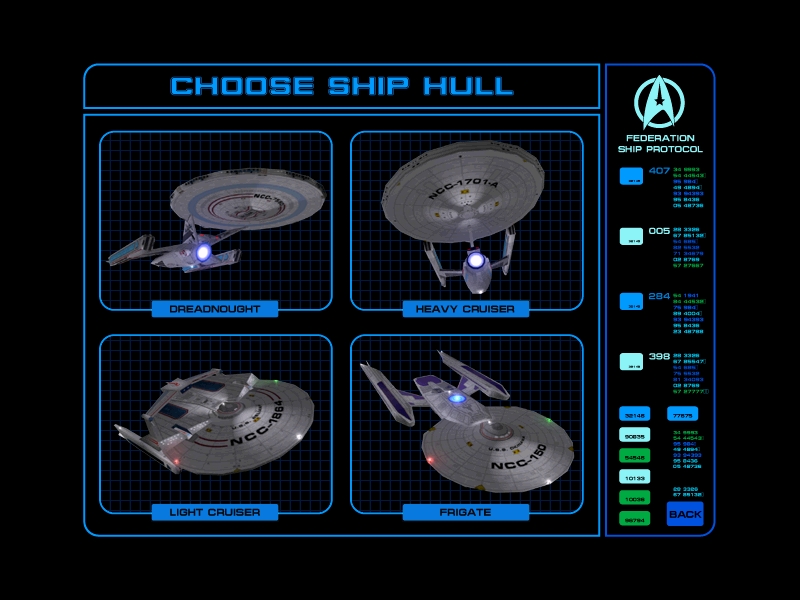
Starfleet Command is a game of tactical starship combat set in an expanded version of the original Star Trek universe. It uses the popular Star Fleet Battles board game as its foundation - a proven winner among strategy games - which has the practical advantage that the developers will not have to spend thousands of hours testing a complex new battle system in order to determine whether the core game system is solid. It also fills out the diplomatic map by adding two races from that game. In Starfleet Command, the Federation, Klingons, Romulans, Gorns, Lyrans, and Hydrans are engaged in a fierce struggle of diplomacy and military might, a contest that can be affected by the actions of a single starship captain.
Flying
Colors
If
SFC’s tactical combat system isn’t both fun and challenging, the game is a failure, regardless of how good everything else in the game may be. Conversely, if the combat system works, then everything else will look better, and the player will spend hundreds of hours engaged in combat and enjoy the entire experience; so it’s hard to overstate the importance of the combat engine. Starfleet Command is designed to be a Star Trek strategy gamer’s dream; a deep, rich, command simulation. The Starfleet Command engine performs in "real time" (computer game-speak for saying that the action is continuous) but since some gamers like to slow down and think about what they’re doing, the player can adjust the speed of the game; at slow speeds, Starfleet Command is a thinking challenge, while at faster speeds, it’s an action challenge. In single-player games, the player can even pause the game and issue as many orders as he wishes, when the game is unpaused, the orders will be carried out. This approach allows us to appeal to both segments of the strategy game market.
There are a lot of tactical commands available to the player, including all of the options that would have been employed by commanders in the original series. Players can overload engines to increase speed, perform emergency decelerations, erratic maneuvers, and high energy turns. They can shoot to disable ships, use transporters to send boarding parties, and hold them with tractor beams. Players can set down mines with transporters, in addition to firing overloads of the ever-popular photon torpedo.
In addition to the traditional weapons of the Star Trek universe, some of the new races have unique weapons such as the Lyran Expanding Sphere Generator, a cone of energy that surrounds a Lyran ship and which hurts anyone that attacks it at extremely close range, or the Hellbore, a powerful energy weapon that envelops an enemy ship and affects all of its shields at once (and costs a helluva lot of energy to use). Because every race has their own unique strengths and weaknesses, the player cannot afford to become too complacent with their battle strategies; and once they see that other races have their own "toys", they’re going to want to play with them too, which increases the length of gameplay.
One of the catch-phrases that games like to use is "a minute to learn, a lifetime to master". The key concepts behind Starfleet Command: firing a phaser, moving a ship, are concepts which any gamer who has ever seen an episode of classic Star Trek will understand. But the options will take considerably longer to master, and it’s going to be a long time before the player runs out of new features to play with.
Beat To Quarters
Starfleet
Command employs a campaign feature called the Dynaverse. The Dynaverse generates missions to challenge the player. The Dynaverse takes into account the strength of the player’s ship, the capabilities of her crew, and the diplomatic situation, and creates a mission with specific goals, such as escorting a freighter safely through a hazardous area, or destroying a pirate listening post. Players who successfully complete missions earn Prestige Points, which may be used to raise ranks, upgrade ships, recruit elite crew, improve contacts with central command (which gives players a greater ability to move around the galaxyy and select their missions) and even allows entry into elite sub-organizations within each race, which gives the player access to a series of special missions.
The Dynaverse makes every Starfleet Command game unique, and simulates an officer’s career. When an SFC game ends, it’s our hope that the player will feel like they’ve created a hero, taken him or her through a long, distinguished tour of duty, and brought their career to a satisfying conclusion.
Ship of the Line
The
core of Star Trek is story, and just as the best battle scenes in a Star Trek episode are those that support a strong story, we want the tactical action in Starfleet Command to support a tale that is exciting and true to the Star Trek universe.
The overstory of Starfleet Command involves the disappearance of the Organians, an extremely powerful alien race . In the original Star Trek episode Errand of Mercy, the Organians forcibly put a stop to a conflict between the Klingons and the Federation, and established the Organian Peace Treaty, a system of peaceful competition for disputed worlds. When the Organians disappear, this opens the door to more aggressive means of expansion, and the deterioration of the status quo between Federation and Klingons sets conflicts into motion across the known galaxy.
The disappearance of the Organians is also accompanied by a subtle, quantum level shift in subspace that causes some weird things to happen throughout the universe. Strange phenomena appears out of nowhere, there are breaches into parallel dimensions, old entities stir, and space monsters are born. The consequences of the Organian disappearance is felt in each race’s storyline, but no single race gets the entire picture; the Organians left their world in order to prevent a new menace from threatening the galaxy, and only by playing all of the races’ storylines to their conclusion can the player get the full picture.
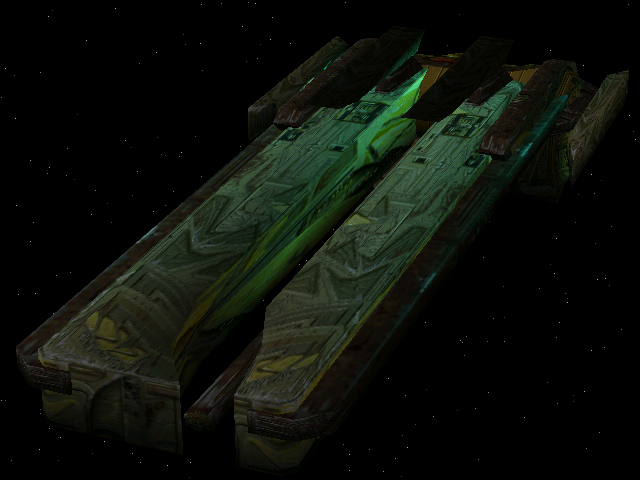
The Federation storyline "Who’s The Fairest One of All", draws on two of the most popular original series episodes for inspiration: Mirror, Mirror, and the Doomsday Machine. In our universe, Commodore Matt Decker was a tragic hero whose crew was killed by the alien Planetkillers and who gave his life trying to destroy it. However, in the evil parallel universe of Mirror Mirror, Supreme Commander Decker sacrificed his crew so he could learn the secrets of the Planetkillers and use them as instruments in his coup to take over the Empire, a coup which failed when he was trumped by that dimension’s Mr. Spock and his long-distance disintegrator. Fleeing his probable death, and taking a large fleet with him, Decker crossed into our universes. When Decker realized what had happened to him, he resolved to take control of this dimension’s Planetkillers and use them to do what he was unable to do in his home universe - conquer the Federation. This series leads to a climactic battle where the player must use experimental technology to stop a fleet of Planetkillers from reaching Earth.
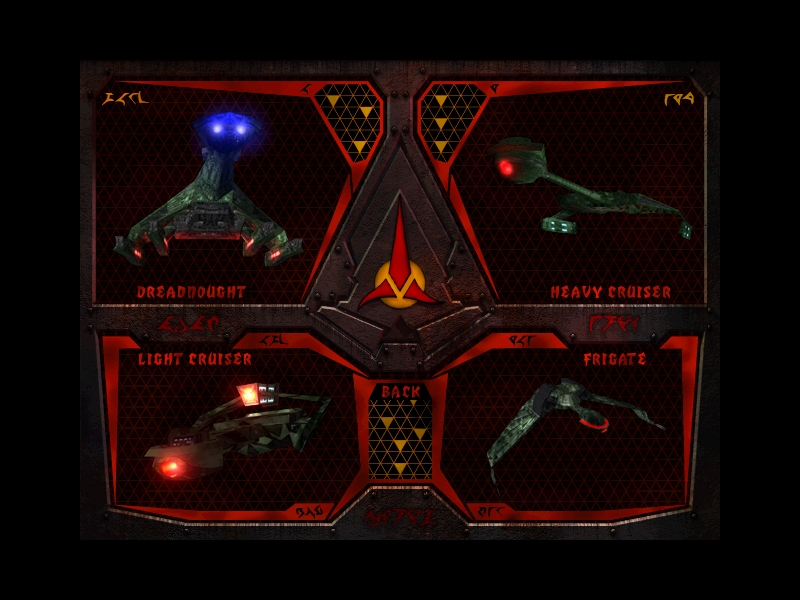
The Klingon series "Exploration and Empire" deals with a darker aspect of their race’s history; throughout their existence, the Klingons have conquered and killed many races, a few of which were psionic. But (as one might gather from Vulcans) psionic minds don’t die as easily as others, and the phenomena that was triggered during the Organians’ departure has created portals to old, lost worlds, and the psionic "ghosts" of races killed by the Klingons are now banding together for revenge: driving Klingon crews mad and taking control of their starships. This series leads to a concluding battle on the Klingon moon of Praxis, which has been taken over by the "ghosts" and is being used as a platform to bombard the Klingon homeworld.
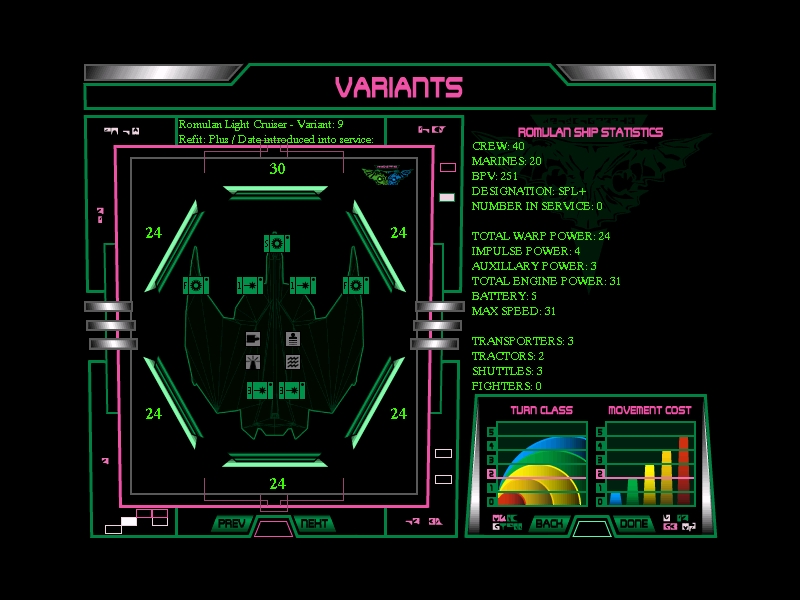
In the Romulan series "A Plague On Both Your Houses", the player has a different dilemma; the player can belong to one of two Romulan factions. The Tal Prai’ex, or Romulan Navy, performs standard naval missions of a generally heroic bent (by Romulan standards); the Tal Shi’ar, or Secret Police, performs intelligence missions of a less wholesome moral nature. A strange plague "The Traveler’s Death" has been released in the empire, throwing it into turmoil. The player will need to navigate a web of intrigue, mutiny, and treason in order to determine who’s responsible for the plague; it’s actually a Tal Shi’ar plan to sabotage Vulcan that’s gone wrong. Before it’s over, one rogue Tal Shi’ar leader will try to use the virus to bring the empire under his control; the player will have to decide which faction to support in this Romulan civil conflict.
The Gorns, the large Reptilian race featured in the original Star Trek episode Arena, are the focus of a series of missions called "The Destiny Egg". This series also deals with factional conflicts; a weak Gorn monarchy rules over a people anxious for rebirth and return to old glory. The laying of a clutch of royal eggs would be a symbol of such a rebirth, but even this hope is destroyed when the eggs are stolen by the Orion pirates. The Orions are themselves working for an old Gorn enemy; the disappearance of the Organians has encouraged the return of a number of very powerful beings, including the Great Father of the Gorn race, a powerful alien entity who was partially responsible for the cultivation of the Gorns long ago, but who was outcast by his sister (the Gorns’ High Mother) and became a diabolic figure in Gorn mythology. The High Father plans to use the stolen eggs to breed a new, more evolved Gorn race, one which would be loyal to him alone. The player can belong to one of three Gorn factions: the King’s Fleet Guard, a member of the royal navy, the Defenders of the Egg, the most powerful Gorn religious cult and traditional guardians of all Gorn eggs, and the Guardians Errant, a glory-hounding mercenary order who are considered the best pilots in the Gorn Confederation.
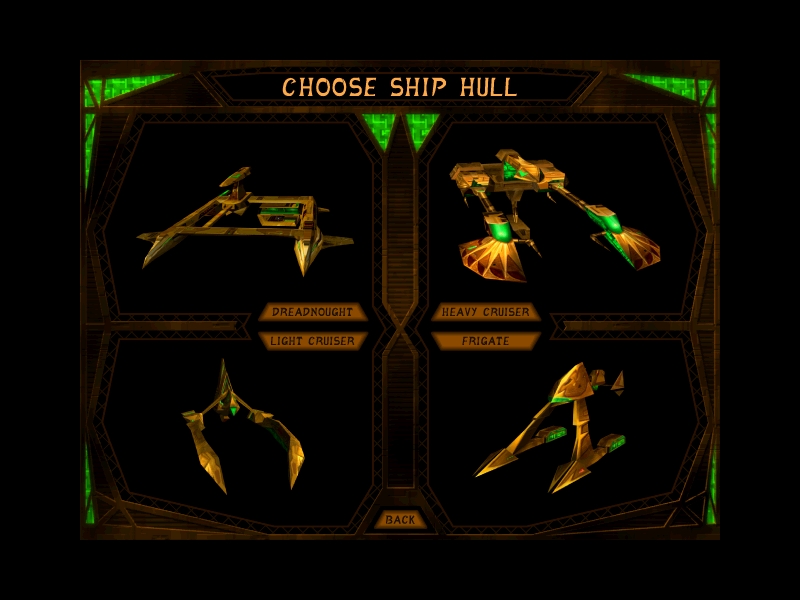
Racial decline is not the Lyrans’ problem in "Technostellopolis", the Lyran mission series. The Lyrans are a feline-humanoid race that is at the height of its technological prowess and enjoying a golden age. But as clans compete for status within the Lyran Empire, they’re engaging a rapidly escalating contests of engineering. Engineers have become the superstars of the current Lyran regime, and are demanding outrageous amounts of money and creative freedom to work on incredibly expensive projects of little practical benefit to the empire. They’re also sabotaging each other’s projects for fear of being upstaged. Unfortunately, the quantum shift that occurs when the Organians vanish disastrously affects many of the Lyran projects, and certain clans and other Lyran enemies decide to take advantage of it. The player has to protect the empire from enemies internal and external. The Lyran player can also belong to one of two clans: the Red Claw, the predominant Lyran clan that’s trying to stay on top of the Lyran social order (and marred by infighting that will bite the player on numerous occasions) and the Iron Fang, a once-respected clan whose reputation was destroyed sixty years ago when the player’s grandfather destroyed the empire.
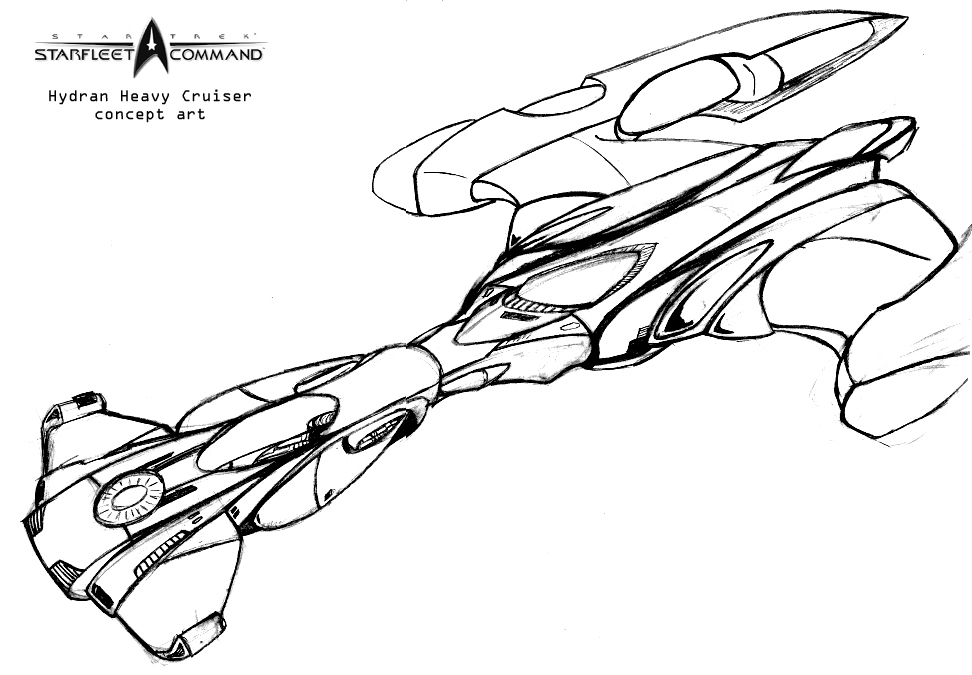
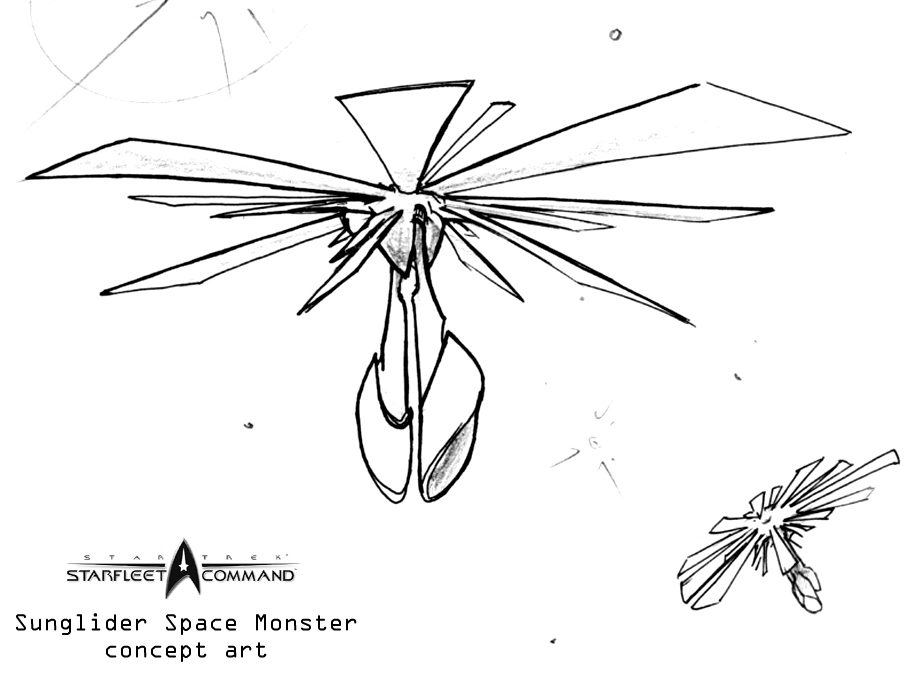
The final mission series, tentatively called "What Rough Beast", is still in the planning stages. The Hydrans are a non-humanoid, very alien-looking species, who worship numerous cults, including what humans would call "Space Monsters". Members of these monstrous species are kept by Hydran cults as objects of worship and as a sort of pet; these pets are kept in carefully maintained areas. But the Organian disruption affects their cages; and dozens of space monsters begin to go on an rampage in the Hydran Star Kingdom, which is taken as a sign of the apocalypse by many of the cults. The player will have to try to contain these space monsters as best he can, and cope with his own crisis of faith as he must confront what he’s previously viewed as gods and deal with them in a less than holy manner.
Each mission series is composed of 8-10 missions, and in addition to the 20+ generic missions generated by the Dynaverse, there will also be over 20 missions that can be used to fill out the player’s epic career, special situations that will occur once in a game and keep the game from feeling too generic. Even the randomly generated missions will have variations in map positions and different introductory and in-game text to keep the player from getting too complacent.
Great gameplay has to be the foremost goal of any computer game; as the great Klingon author Shakespeare once said in another context "the play’s the thing." With Star Trek, there are additional obligations to provide a great story involving characters and cultures that have been beloved by millions for thirty-five years. Starfleet Command is aware of this awesome responsibility, but we believe that our strong tactical play and story experience will provide the truest Trek command experience ever. In the end, the player will have experienced a long and challenging series of missions, and created heroes that are as real and beloved to them as Kirk or Hornblower.
   |
|